

Landing pages… Squeeze pages…
What exactly is the difference between them??
That’s what we are going to discuss in this article:
- What is a landing page?
- What is a squeeze page?
- Landing pages vs. squeeze pages.
Want to make sense of it once and for all?
Continue reading…
What is a Landing Page?
A landing page is a web page that has a single conversion goal.
There are some exceptions to this rule. Sometimes it makes sense to have two conversion goals instead, with one being more dominant than the other.
That being said, the vast majority of landing pages have just one conversion goal.
All landing pages have these three elements:
- Headline
- Copy
- Call to Action (CTA)
There are other popular elements such as customer testimonials, “As Seen On” badges, etc.
It’s important to know that landing pages vary wildly in terms of length.
They range from squeeze pages with less than a hundred words worth of copy to long-form sales pages with several thousand words.
3 Most Popular Types of Landing Pages
Depending on what that single conversion goal is, a landing page can also be referred to as a sales page, lead capture page, squeeze page, unsubscribe page, etc.
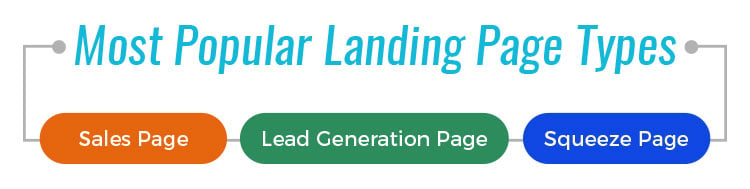
Here are the three most popular landing page types:
- Sales Page
- Lead Generation Page
- Squeeze Page
Let’s take a closer look at each one of them…
What is a Sales Page?
The most common type of landing page is a sales page.
As the name suggests, this page’s conversion goal is a sale, so you can easily recognize them by the “Buy Now” button.
Of course, the text on the button may be different, but its purpose is to finalize the purchase.
Sales pages are divided into short-form ones and long-form ones, depending on the amount of copy on them. Which ones perform better?
That is an ongoing debate between copywriters. Generally, it is believed that the more expensive your product is, the longer your sales page should be.
Long-Form Sales Page Example: Ramit Sethi’s “Finisher’s Formula”
The New York Times best-selling author and famous blogger Ramit Sethi is notorious for his masterful long-form sales pages.
Let’s take a look at the sales page for his online course “The Finisher’s Formula.”
Above the fold, there’s the “I’m this close to giving up on myself” headline.
Right below, you have an arrow that draws your attention and the “Wow. Look at these haunting comments I found online:”
As you can see, the comments themselves are below the fold, which makes you scroll down to read them.
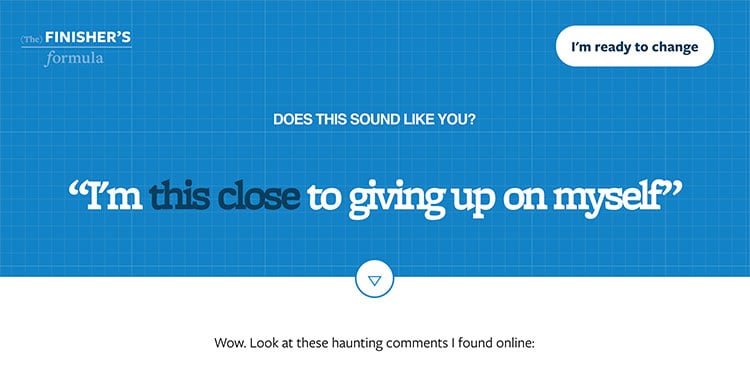
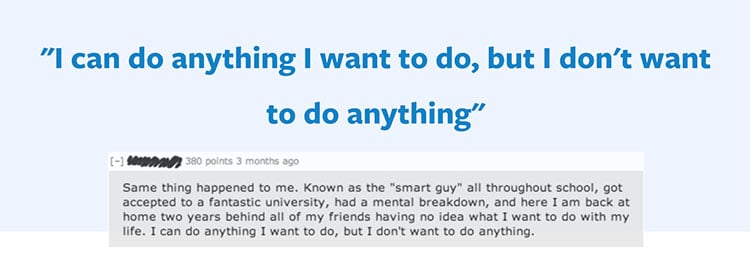
When you do that, you see three Reddit comments in which people share their despair about being unable to accomplish things, as well as mental health problems.
Then Ramit Sethi introduces himself.
Note how he uses his status as a best-selling author to establish his authority.

And then the sales copy begins:
- He describes the problem
- He explains why it’s happening
- He presents a solution
There’s also a Frequently Asked Questions section, a “The Finisher’s Formula is NOT for you if… “ section, and “The Finisher’s Formula IS for you if…” section.
The sales copy is sprinkled with more Reddit comments as well as customer testimonials.
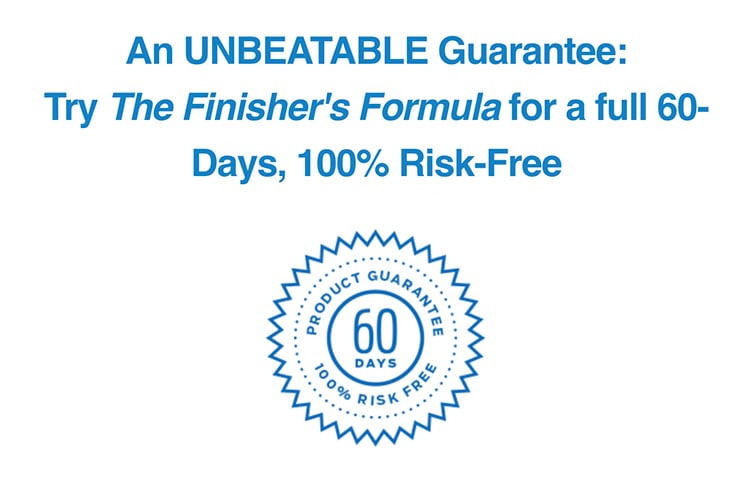
Then, right before the call to action, there’s the 60-day money-back guarantee:
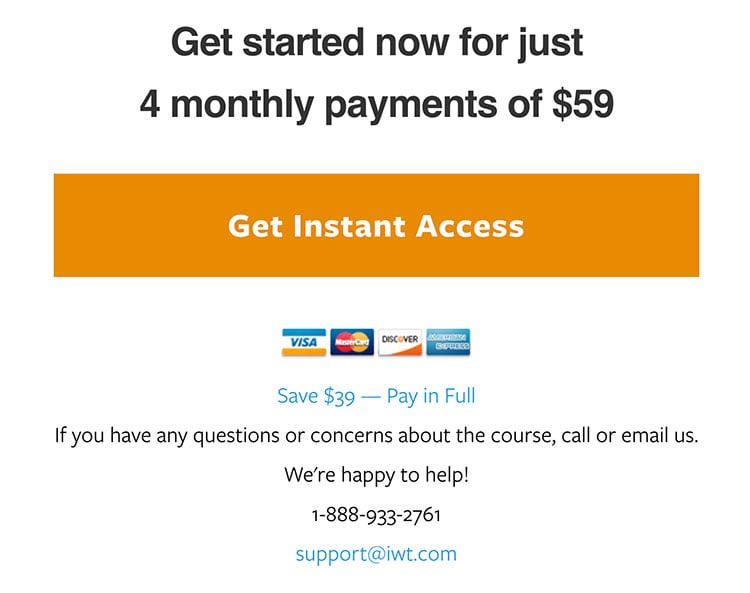
Finally, there’s the call to action, in which Ramit Sethi encourages you to buy the course:
But that’s not it.
There’s more sales copy below this CTA.
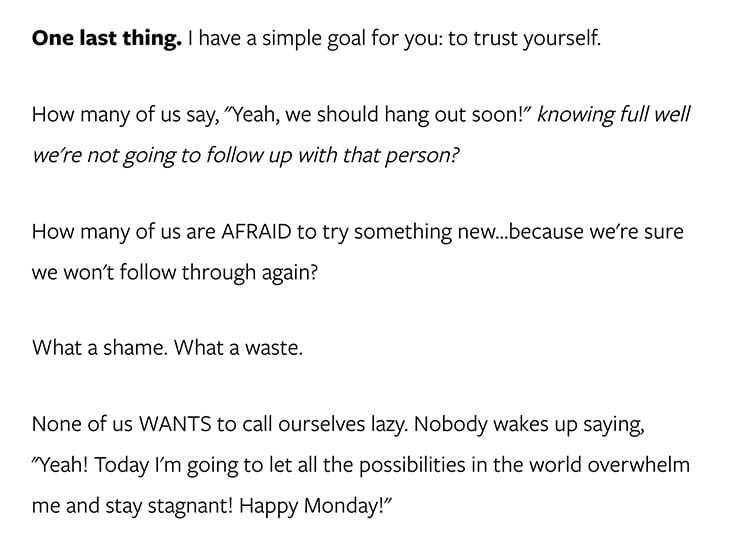
The copy goes on until you finally reach the bottom of the page, where you are presented with the second CTA (it looks the same as the first one).
As you can see, this sales page is enormous. It’s 3,607 words long, excluding the Reddit comments, customer testimonials, CTA, etc.
This allows Ramit Sethi to create an emotional connection with the potential customer before entering his sales pitch.
He first defines the problem, then explains its cause, and only then presents his online course as the solution.
By then, the potential customer feels that Ramit Sethi understands them, making them more receptive to his offer.
A sales page like this works especially well for products that solve a problem associated with shame.
In this case, people who know that they are intelligent, but can’t seem to accomplish anything substantial, often feel tremendous shame over letting themselves and others down.
Going to such lengths to empathize with them, including all those heart-breaking Reddit comments, and featuring customer testimonials helps to:
- Show the potential customer that they are not alone
- Alleviate the shame
- Make them believe that they can change
All this is important when you are selling to a person who is losing faith in themselves.
You can use a similar approach when selling fitness products, weight loss products, personal finance products, personal development products, etc.
Also, again, the general rule is that the higher the price, the longer the sales page should be, so be prepared to put in some serious effort into your sales page if your product costs more than $50.
Short-Form Sales Page Example: Ramit Sethi’s “I Will Teach You To Be Rich”
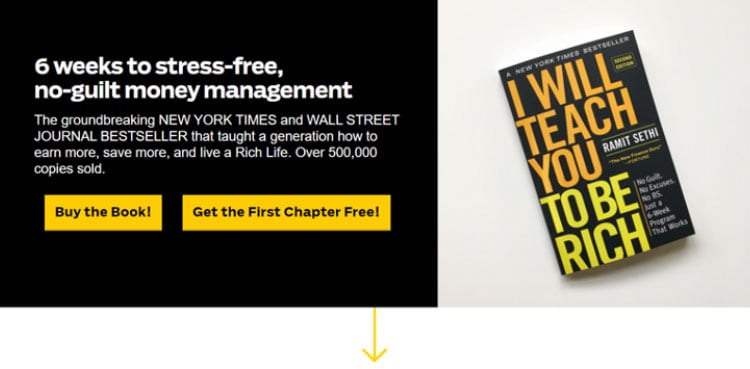
Now let’s take a look at Ramit Sethi’s sales page for his best-selling book, “I Will Teach You To Be Rich.”
Above the fold, you have a short pitch for the book, as well as three social proof points (“The New York Times bestseller,” “The Wall Street Journal” bestseller,” “Over 500,000 copies sold”).
There’s also the arrow that encourages you to scroll down and read the rest of the page.
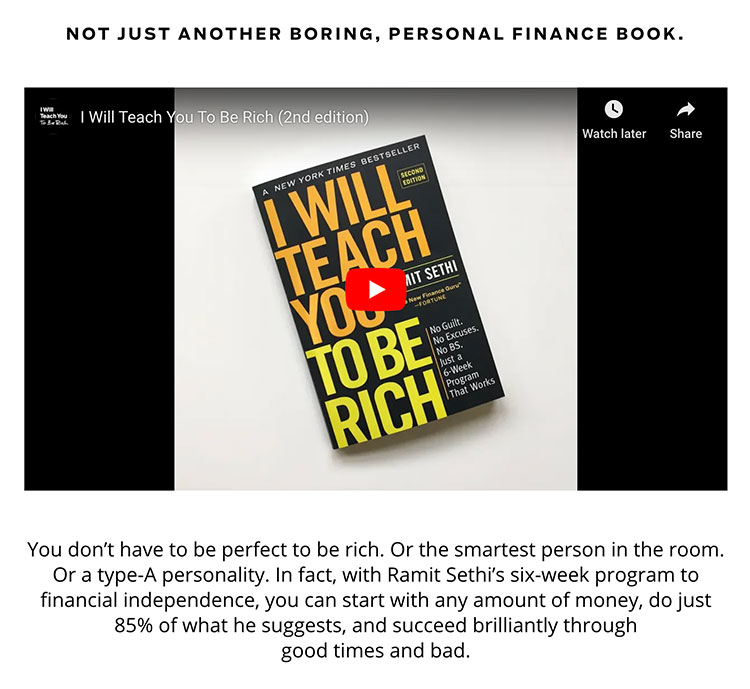
Then there’s a short, super casual promotional video in which Ramit Sethi opens a mail package with the 2nd edition of his book.
He explains what’s new in this edition and that this book is meant to help anyone who wants to live their version of the rich life.
He also throws in social proof by showing the page with reader stories and mentions a story about a couple who retired at 35 and is now traveling the country in an RV.
Then there’s an opt-in email form that offers you the first chapter for free in exchange for your email address:

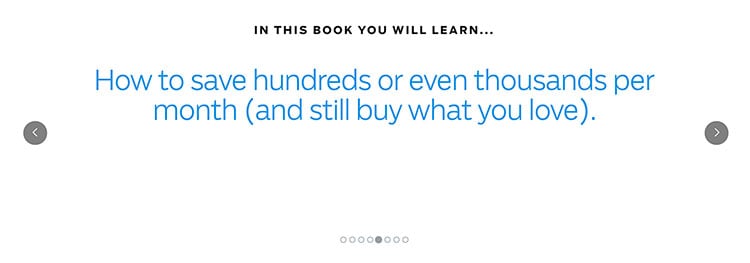
Then there’s the “In This Book You Will Learn…” slideshow that features the benefits of buying the book.
This slideshow is followed by the “Featured In” section with a media badge display that provides more social proof.

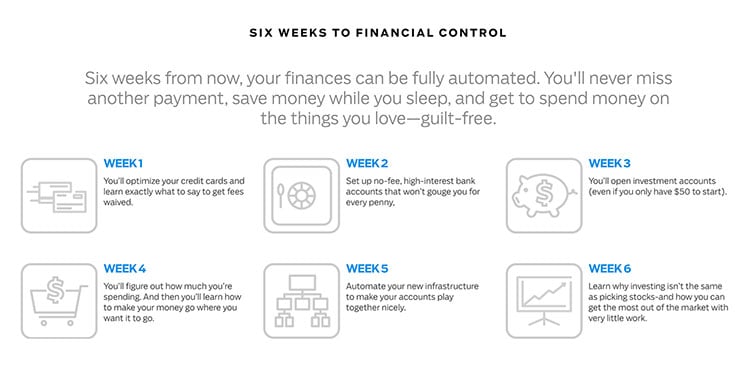
Then there are the “Six Weeks to Financial Control” section that explains the program proposed in the book:
Then there’s a reader testimonial slideshow with more social proof:
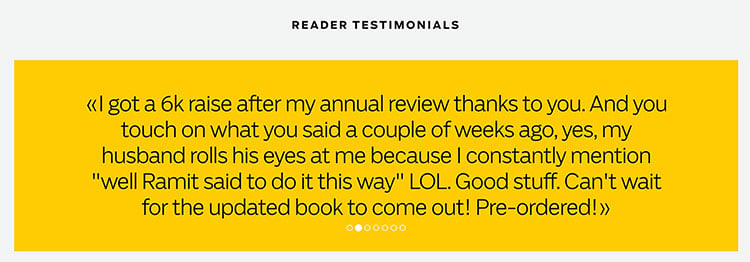
Finally, there’s the “About the Author, Ramit Sethi” section that features more social proof as well as one last call to action.

As you can see, this short-form sales page has much less copy, the pitch is straightforward, and there are two conversion goals instead of just one.
In fact, Ramit Sethi appears to be less interested in selling you the book and more interested in getting you on his email list.
This makes sense because if you do get on his email list, you will be more likely to buy the book and buy his other products.
A short-form sales page like this works best for cheap products within the impulse buying range and therefore doesn’t require as much persuasion to sell (you can get the paperback for Ramit Sethi’s book for less than $15).
While having two conversion goals on a sales page is unusual, it may make sense for cheap information products to offer the first lesson for free to get the potential customer on your email list.
In most cases, it’s best only to have one conversion goal because adding the second one distracts from the first one.
What is a Lead Generation Page?
Another popular landing page type is the lead generation page.
A lead generation page has the goal of collecting the potential customer’s contact details so that you could reach out to them with a sales pitch later.
This always includes name and email address but can also include additional information, such as phone number, company name, company size, job title, etc.
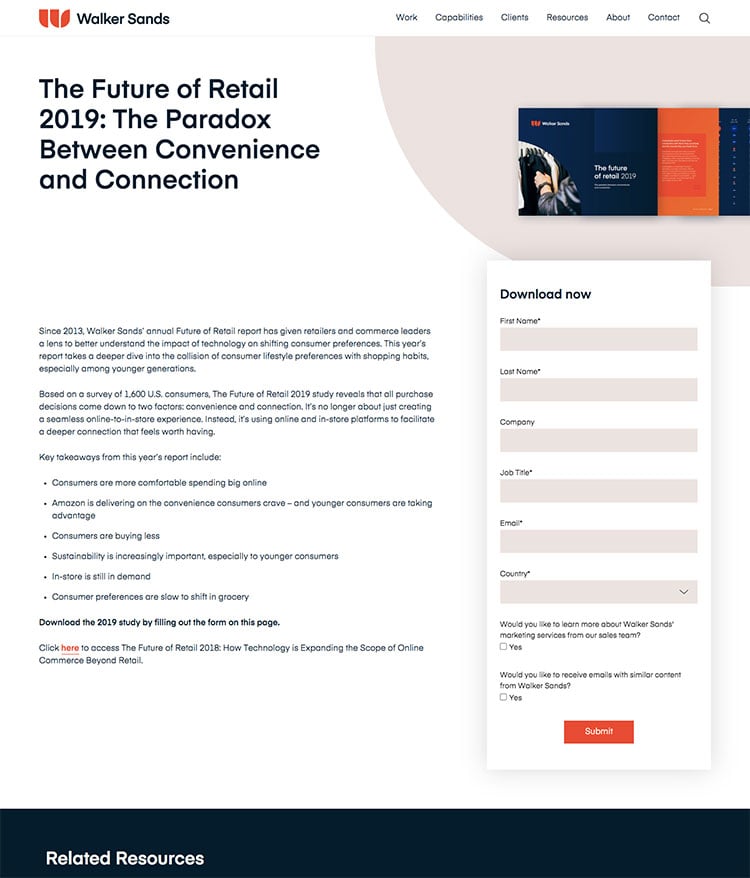
Lead Generation Page Example: Walker Sands “The Future of Retail 2019”
Walker Sands publishes an annual “The Future of Retail” report in which they share their research on retail trends.
This report is free to download, but you have to provide personal information to do so, including your full name, company name, job title, email address, and even country.
What is a Squeeze Page?
A squeeze page is a type of landing page that captures the visitor’s email address.
They serve the same purpose as lead generation pages, but they only ask for either just the email address or name and email address.
Squeeze pages are often displayed as pop-ups as opposed to separate web pages.
It’s common to offer a lead magnet to potential customers in exchange for their email addresses.
A lead magnet is a free download that they can access once they subscribe to the email list.
It can be an e-book, a video, an email course, etc.
It’s also worth noting that squeeze page copy is usually extremely short, most commonly a few hundred words, though sometimes it can even be less than a hundred.
Squeeze Page Example: Backlinko
Backlinko is one of the most popular SEO blogs in the world.
Its founder Brian Dean has used various squeeze pages to grow his email list to 141,996 subscribers.
Here’s one of them:
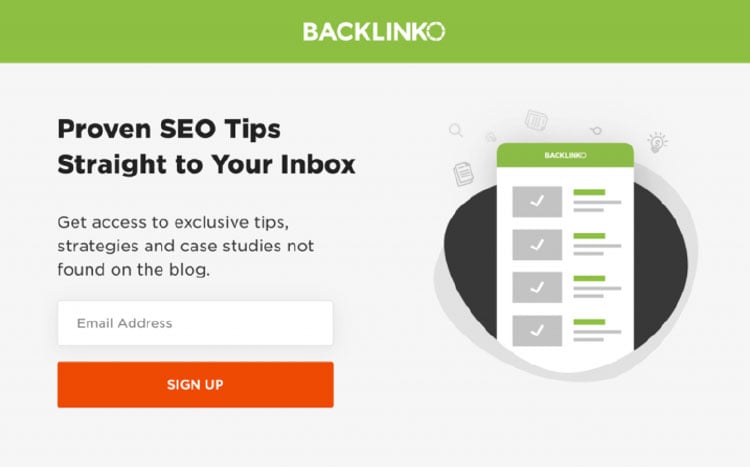
Interestingly, it doesn’t offer a lead magnet but promises exclusive content not found on the blog.
Brian Dean wrote up a guide in which he reveals his squeeze page secrets:
“How to Create a Squeeze Page [Template Included]” (Backlinko)
Squeeze Pages vs. Landing Pages
Okay, so to recap:
- A landing page is a web page that has a single conversion goal – This includes sales pages, squeeze pages, etc.
- A squeeze page is a type of landing page that has the goal of capturing email addresses.
This means that all squeeze pages are landing pages.
What’s the Difference Between a Squeeze Page and a Landing Page?
The question “What’s the difference between a squeeze page and a landing page?” doesn’t make sense once you understand these terms.
There is no difference between a squeeze page and a landing page because a squeeze page is a landing page.
That being said, there are also other types of landing pages, so keep that in mind.
Conclusion
Marketing terminology can be confusing.
But it’s not all buzzwords. There’s a method to the madness.
When someone is talking about a “landing page,” make sure that you know which type of landing page they refer to since there are quite a few.
Meanwhile, if they mention a “squeeze page,” you can probably assume that they are talking about an email pop-up unless specified otherwise.
(Yes, there are squeeze pages that are not pop-ups but separate web pages, but they are becoming rarer and rarer).
I hope that helps!